
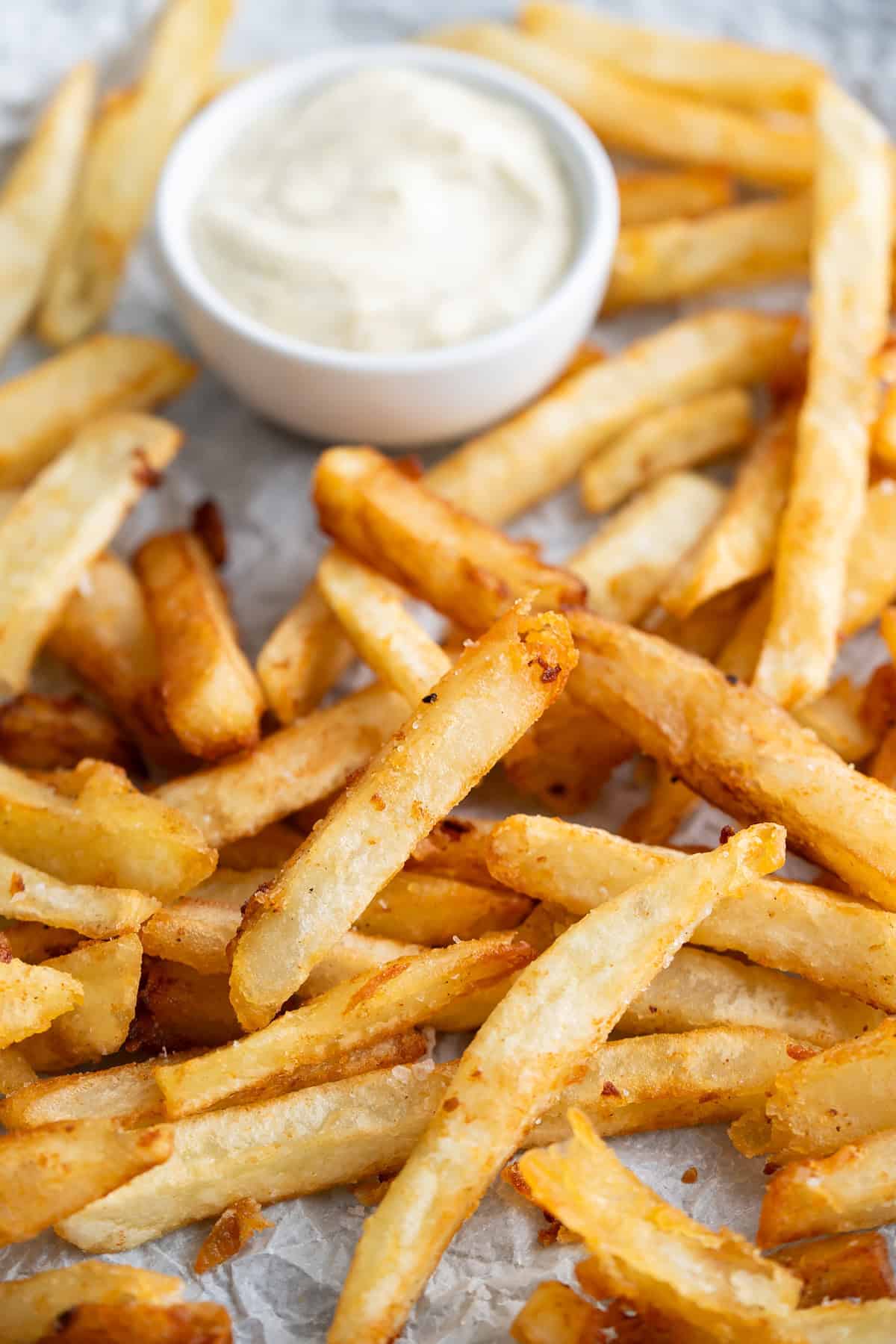
This crispy homemade french fries recipe uses a simple double-fry technique to create that golden, crisp, melt-in-your-mouth exterior with a soft, fluffy center. This simplified foolproof method doesn't require fancy equipment and is a game-changer in the kitchen.
No tough oven fries or limp, unevenly cooked sadness - this recipe fixes all of that!
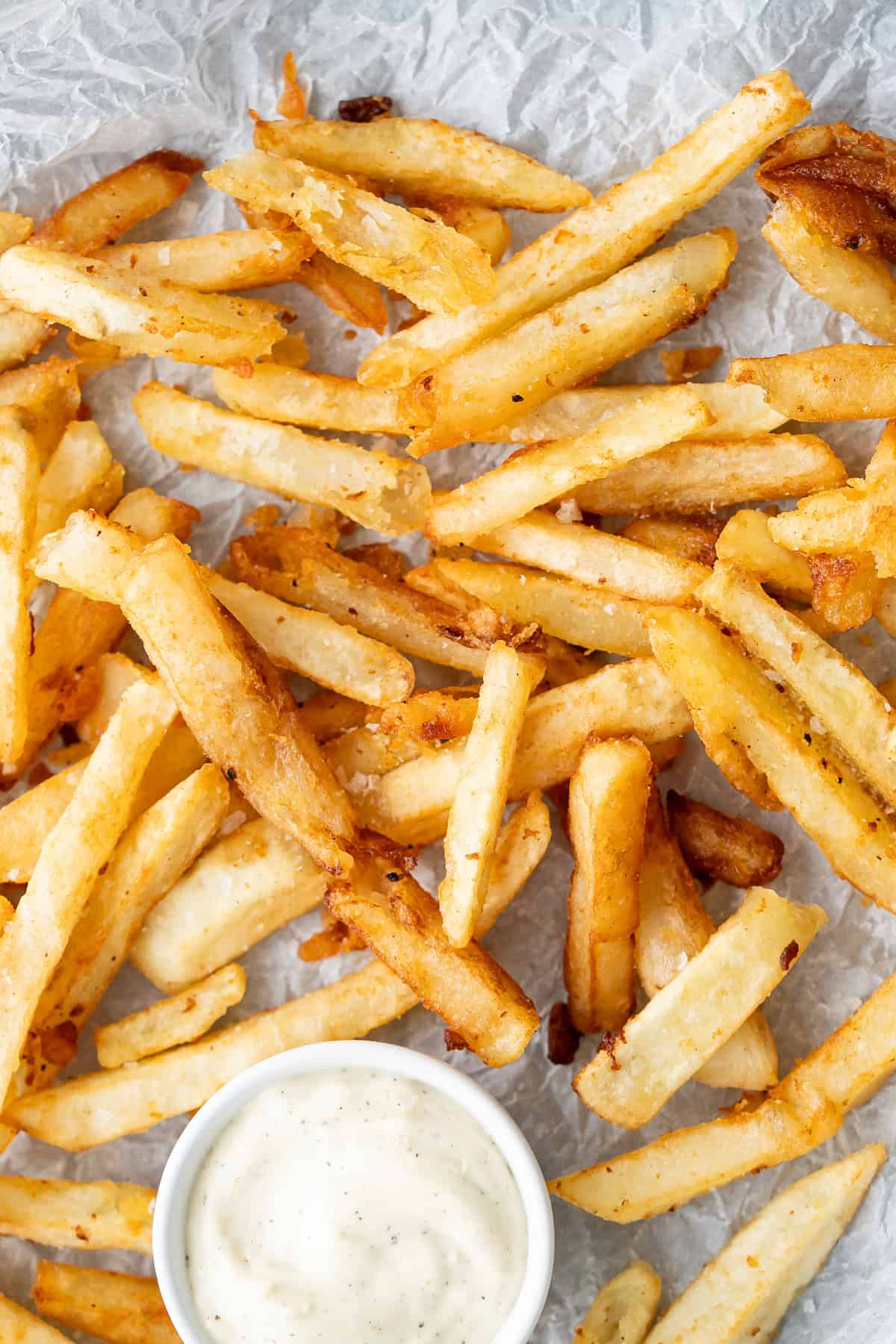
Why this works
This double-fry method is what separates good fries from truly crispy masterpieces. The first fry cooks the potatoes through and removes excess moisture, while the second fry creates that thin, golden-crisp exterior.
The added starch (my "secret" ingredient) helps form an even coating so every fry comes out crunchy instead of patchy or soft.
Did you know I'm in expert in crispy potato recipes? Check out these other favorites:
Jump to:
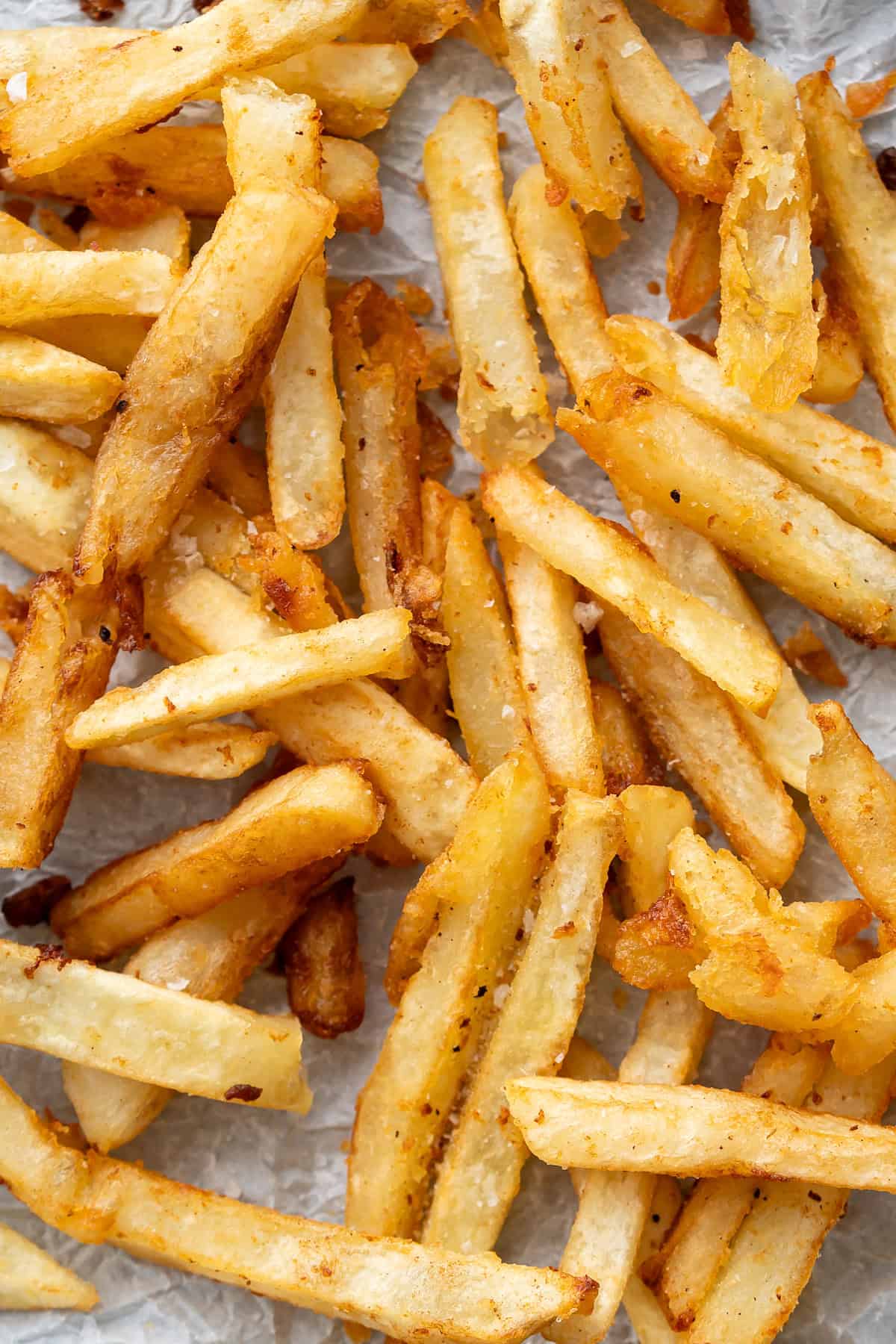
How to make it (with photos)
This homemade crispy fries recipe has been simplified to what really matters, so it's easy to replicate at home.
Ingredient Notes + Substitutions
Just russet potatoes, potato starch, oil, and salt come together to make these homemade double-fried fries.
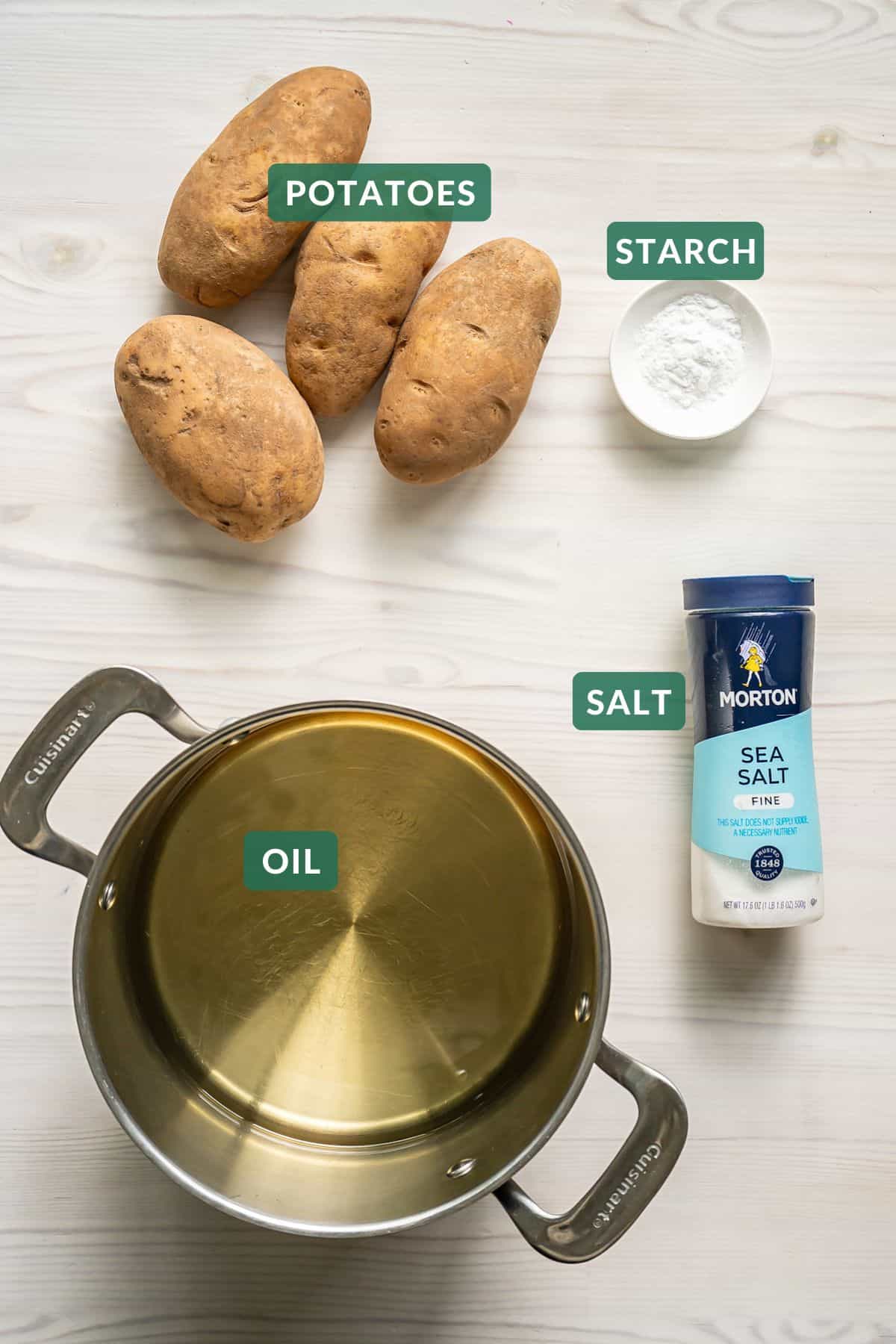
Potatoes
Russet potatoes are recommended for this recipe because they have a high starch to moisture ratio, making that crisp outside and fluffy inner texture. They are the gold standard potato for french fries.
If making this homemade fries recipe becomes a habit in your home (like mine), I recommend large organic russet potatoes because they have a superior flavor and texture.
While this method works for other potato varieties, it is less reliable due to different moisture and starch amounts that naturally occur amongst potato varieties.
If you have Yukon gold potatoes, I recommend you try the best way to eat gold potatoes - you won't regret it!
Potato Starch
Adding just a little starch to the fries is what makes that crispy uniform outside possible. Without it, fries can be patchy in their crispness and will become softer as they cool.
This method will still produce crispy fries without any starch, but it is more consistent and reliable with it.
Oil
A neutral frying oil like vegetable oil is a great option for beginners. However, if you're ready to level up, my family prefers peanut oil and loves experimenting with new savory fry oils.
Duck fat, beef tallow, and other animal fat tallows or drippings are popularly used for fries all around the world. Some prefer liquid oils and others prefer animal fats.
It's also ok to mix oils and lard; for example half peanut oil and half vegetable oil, adding lard or strained bacon fat to the peanut oil, etc.
Important Note: Different oils and fats have different storage instructions. Plant oils can be used more than once and typically last longer than animal fats. Make sure to properly strain and store oil, and discard and swap it out regularly. See the quick guide to storing common french fry oils and fats below the recipe card.
See the recipe card below for a full list of ingredients with quantities.
When you make this recipe, please leave a rating and review below. I always appreciate the feedback! ❤️
📖 Recipe
Crispy Homemade French Fries (Double-Fry Method)
Ingredients
- 4 large russett potatoes peeled or unpeeled
- 2 teaspoons potato starch
- 4 cups vegetable oil or peanut oil (recommended)
- ½ teaspoon salt plus more to taste
Instructions
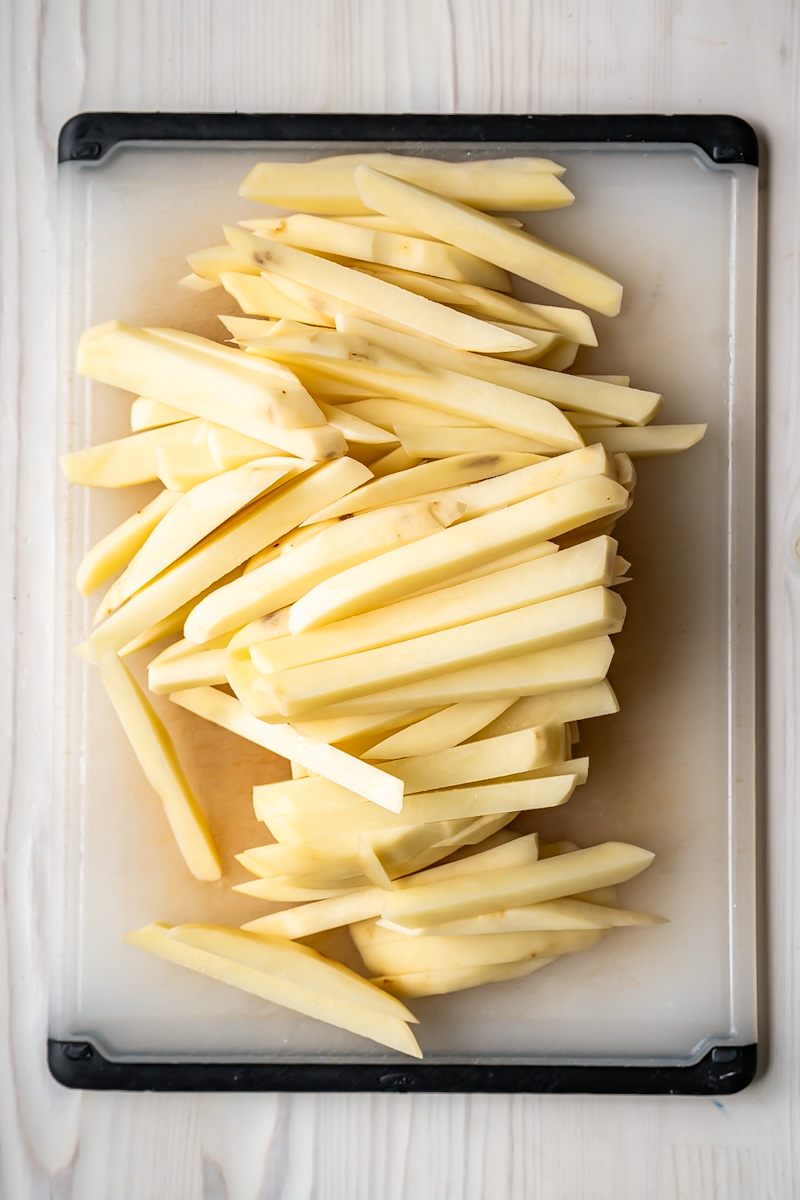
- Cut into fries: Cut the potatoes in ½-inch (1 cm) wide fries. Avoid thinner fries - they can break during the double-fry method.
- Soak in cold water: Soak the fries in cold water for ten minutes. Meanwhile, heat the oil in a large pot over medium high heat.
- Drain & starch: Drain the fries well and dry gently with a towel. Toss in a large bowl with potato starch until evenly coated.
- First fry: Heat the oil to 250 degrees F. Carefully add the fries. Fry for 3 minutes, then use a metal strainer to transfer the fries to a bowl.
- Turn up the heat: Increase the heat and bring the oil to 400 degrees F.
- Second fry: Fry half the fries at a time. Add the first batch to the pot and separate clumps with the strainer. Stir every 3-5 minutes to encourage even browning and prevent clumping. Remove from heat when golden brown, which will give a crispy but not too crunchy texture (about 7-9 minutes). 🍟 Light golden color = softer fries with light crisp🍟 Deep golden color = crunchier fries
- Salt & last batch: Transfer the cooked fries to a clean bowl with the wire strainer. Toss with salt immediately (to taste). Enjoy warm, and repeat step 6 with the remaining fries.
Notes
Nutrition
Frying Oil & Fat Storage - Quick Guide
General Tips:
- Strain all oils and fats well to remove food and burned bits and store in a cool dry place.
- Let all oils and fats cool before handling and handle carefully.
- Let cool completely before storing.
- Discard any oil or fat if it smalls rancid, foams excessively, darkens heavily, or tastes off.
Vegetable-Based Oils - Store sealed in a cool dry place.
- Vegetable Oil: Good for 1-3 months. Good beginner option and easy to use.
- Peanut Oil: Good for 2-3 months. Excellent fry flavor and high smoke point.
- Canola Oil: Not recommended. I think it tastes like gasoline (yuck!).
- Avocado Oil: Good for 2-3 months. Expensive with very high smoke point.
Animal-Based Fats - Store sealed in the refrigerator.
- Beef Tallow: Good for 1-3 months. Classic steak-fry flavor.
- Duck Fat: Good for 1-2 months. Especially good for crispy fries with a rich flavor.
- Lard: 1-2 months. Traditional option, savory flavor.
- Bacon Fat: 2-4 weeks. Best used with another oil, adds bacon flavor.
Expert Tips
Make amazing crispy french fries on the first try with these expert tips.
Work in batches.
Since overcrowding the pan drops the oil temperature and leads to soggy fries, I recommend working in batches.
As written, I make this recipe in two batches in a large 6-quart soup pot. Frying in small batches keeps the oil hot and the fries crisp.
Salt immediately after the second fry.
Season the fries as soon as they come out of the oil, while they're still hot, so the salt sticks. This is what professional fry shops do (you can watch them at open kitchens like Five Guys).
Cut the fries evenly.
Try to keep the fries roughly the same thickness so they cook evenly. Smaller fries will be crisper, larger fries will be softer, and some variation is expected (and we enjoy it that way).
Don't skip the double fry.
This method is explicitly written for the double fry method with the correct temperatures for each stage. The first fry cooks the potatoes thorugh, the second adds the crunch. Skipping the second fry is the most common reason homemade fries turn out soft.
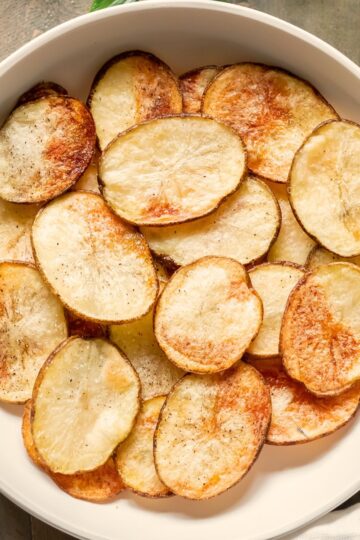
If this post is making you hungry but you don't have time for the full double fry right now, make my Cottage Fries Recipe while you read.
Recipe FAQs
Here I answered some frequently asked questions about this recipe. Don't see your question? Leave it in the comments at the end of this post and I'll answer within two business days.
Homemade french fries are really best when eaten fresh. However, if you have leftovers, let them cool completely and store in an airtight container in the fridge.
Reheat in the oven or the air-fryer at 400 degrees F until hot and crispy (about 5-8 minutes, watch carefully). This method helps to crisp them up again, and they taste pretty good!
No. Soaking in cold water for 10-30 minutes removes excess surface starch and prevents the fries from sticking together or becoming gummy. They can still turn out very good with this double-fry method without soaking, but it is less reliable.
If skipping the soak, you still want to add the potato starch because it is a different kind of starch, and adds back a controlled coating for crispness.
For this method, you can actually prep the fries a little bit ahead of time. Complete the first fry and let them cool. Then, before serving, do the second fry so they are hot and crispy.
More Crispy Potato Recipes
Looking for more crispy potato recipes and other potato sides? Try these:



Jamie says
These are really the best fries and are easy to make at home. I was surprised by how quickly they come together.